A 12-volt fuel transfer pump is exactly what it sounds like: a small electric pump you power from a vehicle battery or portable power station to move gasoline, diesel, or other fuels from one container to another — from a jerry can into a truck tank, from a bulk drum into a generator, or from a boat’s portable tank into its fill port. The number most buyers anchor on is GPM (gallons per minute) — the flow rate printed on the box. Higher GPM means less time standing in the heat holding a nozzle. The problem is that advertised GPM figures are almost always measured under ideal lab conditions: clean fluid, zero hose length, no vertical lift, no back-pressure. The moment you add 10 feet of hose and pump uphill into a tank with a vented cap, that number drops — sometimes by half. This article breaks down what the spec sheets actually say, what owners consistently report in long-run use, and how to apply a simple decision rule before you spend anywhere from $35 to $350.
Why the Gap Between Advertised and Real-World GPM Is Larger Than You Think
Flow rate in a centrifugal or rotary vane pump — the two dominant types at this price tier — is not a fixed number. It is a curve. Every pump has a performance curve that plots GPM against head pressure, which is the resistance the pump fights: vertical lift, hose friction, and back-pressure from a tight fill neck. Manufacturers almost universally publish the peak of that curve — the flow rate at zero head, with the outlet unrestricted.
For practical fuel transfer work, you are rarely at zero head. A typical overlander scenario involves a jerry can strapped to a roof rack, 8–12 feet of 3/4-inch hose dropping to a fuel filler, and a nozzle sitting slightly below the can’s center of gravity. That setup introduces roughly 2–4 feet of effective head pressure and meaningful hose friction. Marine operators filling a below-deck tank from a cockpit-stowed portable can face similar or worse conditions. Rural operators pumping diesel from a 55-gallon drum into a tractor might add an inline filter — further restriction.
Underwriters Laboratories’ UL 79 Standard for Power-Operated Pumps for Petroleum Products governs safety requirements and materials compatibility testing for pumps in this category. Per that standard, performance testing is conducted under controlled inlet and outlet conditions that do not replicate installed field use. That is not a flaw in the standard — it is a flaw in how marketers use certification language as a throughput claim.
The practical result: expect a 30–50% flow-rate reduction from advertised specs under normal field conditions. Owners across long-run reviews consistently report this gap, and it is the single most important number to internalize before evaluating any pump in this category.
Head-to-Head: Three Tiers, Three Pumps
The pumps below represent the three most consequential tiers in the 12V portable fuel transfer category. Each section below examines published specifications alongside aggregated owner-reported performance, then closes with a tier marker to anchor the comparison.
Fill-Rite FR1210G: The Rotary Vane Benchmark
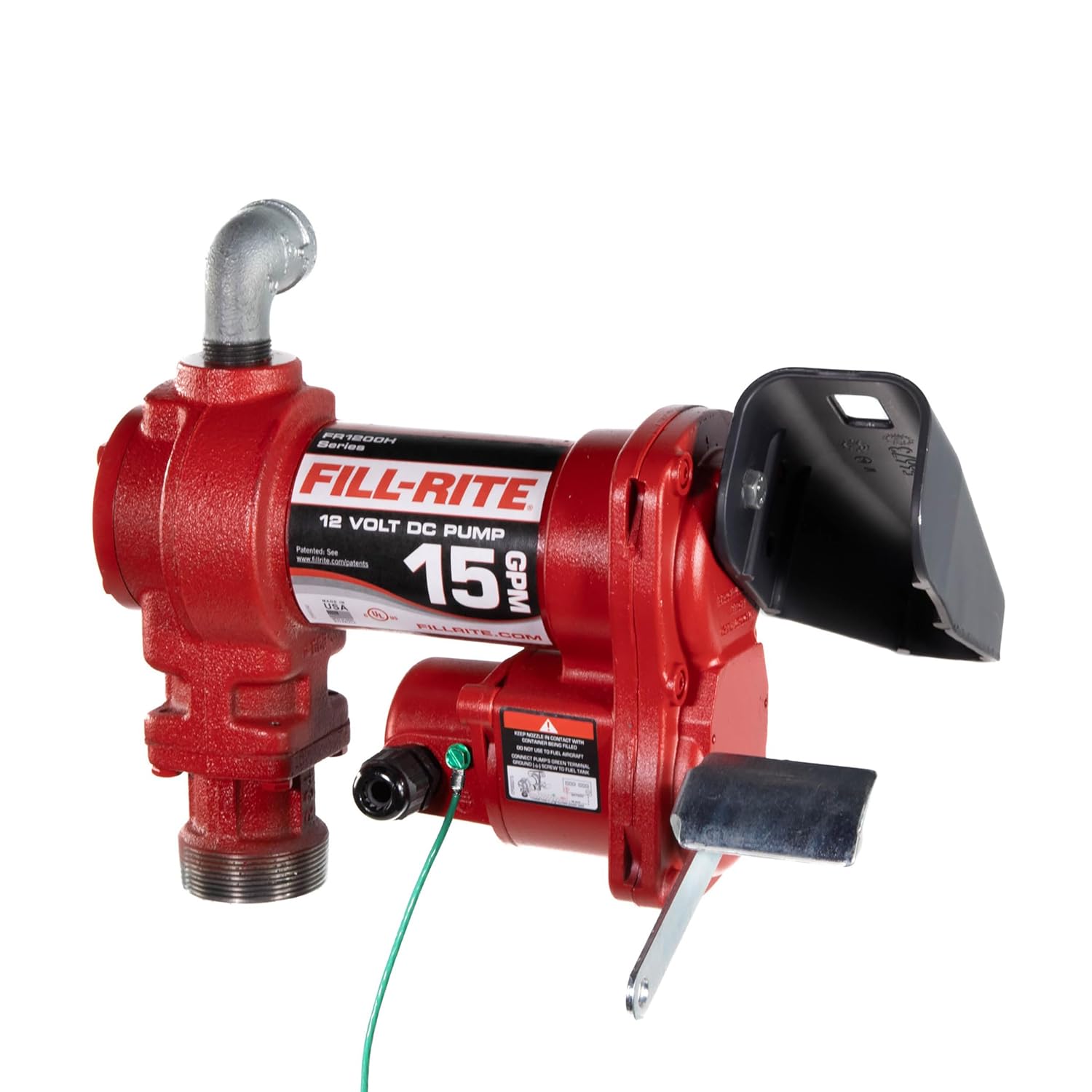
The Fill-Rite FR1210G is the reference-class unit in the 12V portable segment. Manufactured by Tuthill Corporation, it has been the default recommendation in fleet, agricultural, and serious overlanding contexts for years. Per the Fill-Rite FR1210G product specification sheet published by Tuthill Corporation, the pump is rated at 8 GPM maximum flow with a 1/2-inch outlet port and draws approximately 13 amps at 12V.
Owners consistently report real-world flow in the 4.5–6 GPM range when using 10–12 feet of 3/4-inch hose with a manual nozzle — squarely within the 30–50% real-world reduction framework. Popular Mechanics’ editorial coverage of fuel transfer pumps attributes the FR1210G’s reputation for consistent multi-year performance partly to its rotary vane pump mechanism, which maintains better flow consistency across moderate head pressures than cheaper diaphragm designs at comparable prices.
What the spec sheet does not emphasize: the FR1210G requires a direct battery connection via ring terminals to a vehicle battery or dedicated auxiliary battery. It pulls enough amperage that running it off a cigarette lighter socket or a light-duty jump pack routinely trips fuses or drains portable batteries. This is a compatibility constraint that surprises buyers who assume any 12V source will do. The pump ships with a manual-on nozzle and a relatively short suction tube, so drum operators typically source an extension separately.
At its current 2026 street price in the $180–$220 range depending on bundled accessories, the FR1210G pencils out strongly for frequent, high-volume use. Owners in long-run reviews regularly report 5–10 years of seasonal service without rebuild.
Fill-Rite
$472.90
In stock on Amazon
Check price on AmazonVEVOR 12V Transfer Pump: Honest Assessment of the Middle Tier
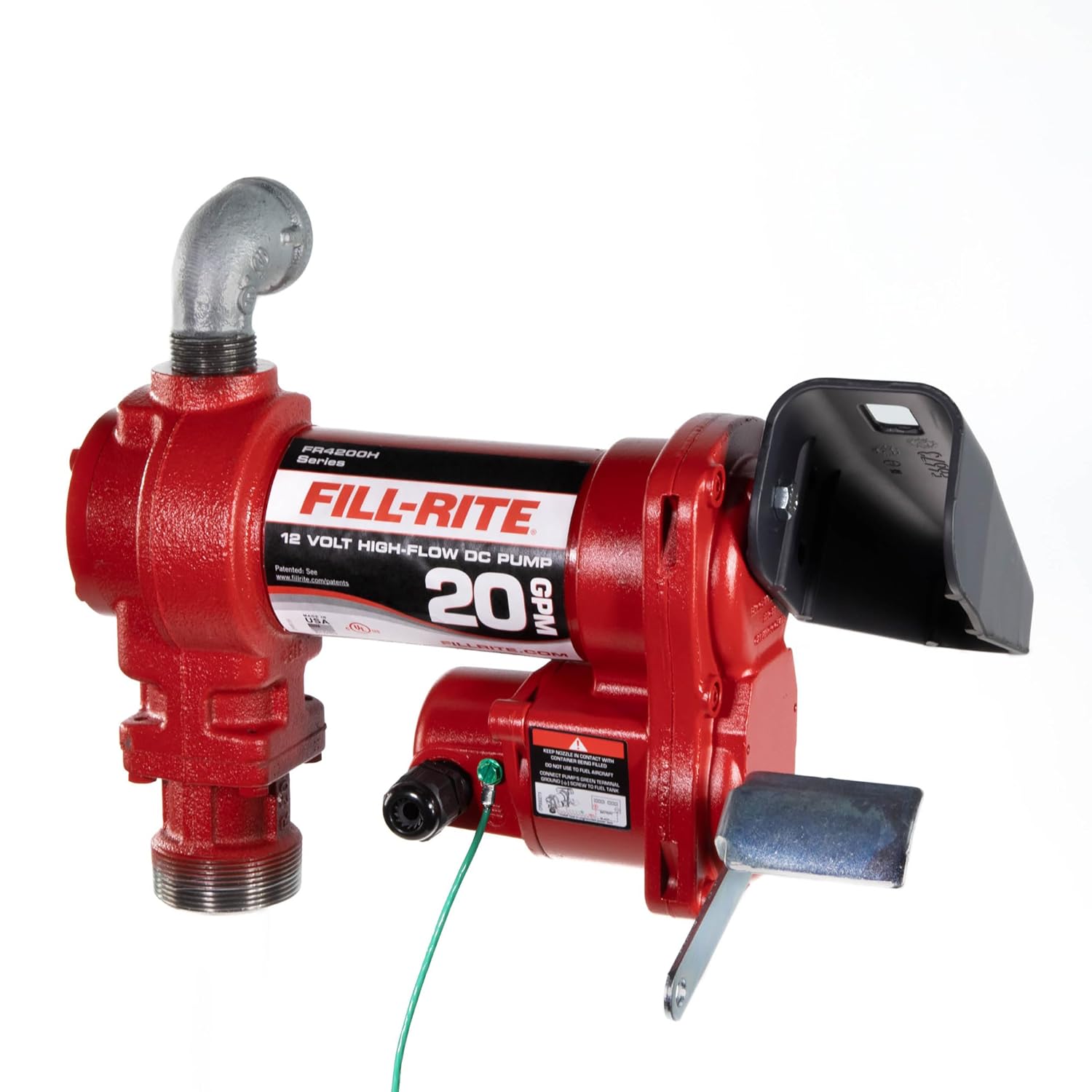
VEVOR’s 12V fuel transfer pump lineup occupies the $55–$90 price band and has become one of the most-purchased options in the category on the strength of aggressive advertised specifications. VEVOR’s current flagship 12V unit is advertised at 10 GPM — a figure that, without context, appears to outperform the Fill-Rite FR1210G.
Here is the context: VEVOR’s 10 GPM figure reflects a diaphragm-style pump measured at near-zero head with minimal hose. Across aggregated owner reviews, the consistent real-world pattern is 3–4.5 GPM under field conditions with 10 or more feet of hose. That is not necessarily a dealbreaker — 3 GPM still fills a 5-gallon can in under two minutes — but buyers expecting spec-sheet performance are routinely disappointed.
Practical Sailor’s coverage of portable pump options in marine contexts notes that diaphragm pumps, which dominate this price tier, handle head pressure less gracefully than rotary vane designs and show more pronounced flow reduction as hose length increases. For a boater filling from a 6-gallon portable tank at cockpit level, this rarely matters. For someone pumping from a ground-level drum up into a raised auxiliary tank, the difference is significant.
The more substantive concern aggregated from owner reviews involves seal longevity with ethanol-blended fuels. VEVOR units use seals rated for gasoline and diesel compatibility, but owners in multi-run reviews note that seals can show degradation after 18–24 months of regular use with E10 and higher ethanol blends. This is a category-wide issue at this price point rather than a VEVOR-specific defect, but Fill-Rite’s use of documented Buna-N seal material gives it a durability edge that longer-tenured owners consistently mention.
For intermittent, light-volume use — seasonal generator fueling, occasional jerry can top-offs, or pumps that spend 10 months a year in a storage bin — the $60–$90 price point is defensible. For weekly or daily transfer operations, the cost-per-use math shifts toward the premium tier within two to three years.

GPI 137100-01
$349.99
In stock on Amazon
Check price on AmazonBudget Cordless Pumps: The $30–$55 Tier and Where It Actually Fits
The past 18 months have seen a proliferation of battery-integrated cordless fuel transfer pumps — units with a built-in lithium cell pack that require no external 12V source. These are priced at $30–$55 and advertised at 2–4 GPM. The category is dominated by generic house brands and sub-labels that share common manufacturing origins across multiple storefronts.
Published specs on these units often claim 2.5–3 GPM. Owners consistently report 1–1.8 GPM under realistic field conditions — roughly equivalent to a standard hand-pump siphon. The internal battery capacity on most units limits continuous run time to 10–15 minutes before requiring a recharge, which constrains total volume per session to roughly 15–20 gallons on a full charge. That is adequate for a single 5-gallon can transfer but marginal for anything larger.
Where these pumps genuinely earn their place: convenience for small, infrequent transfers where running a battery cable is impractical. A kayak angler topping off a small outboard from a 1-gallon portable container. A homeowner who stores a single 5-gallon safety can for their lawn mower and transfers once a month. In those scenarios, the cordless format is a genuine quality-of-life improvement, and 1.5 GPM is entirely sufficient.
What they are not: a replacement for a rotary vane pump in any application involving diesel, regular high-volume transfer, or harsh outdoor storage conditions. NFPA 30, Flammable and Combustible Liquids Code, Chapter 9 addresses transfer equipment used in flammable liquid service and notes the importance of compatibility between pump seal materials and the specific fuel type. At the sub-$50 tier, material documentation for ethanol blend compatibility is rarely available from the manufacturer, which is a meaningful gap for anyone relying on E15 or higher-blend fuels.
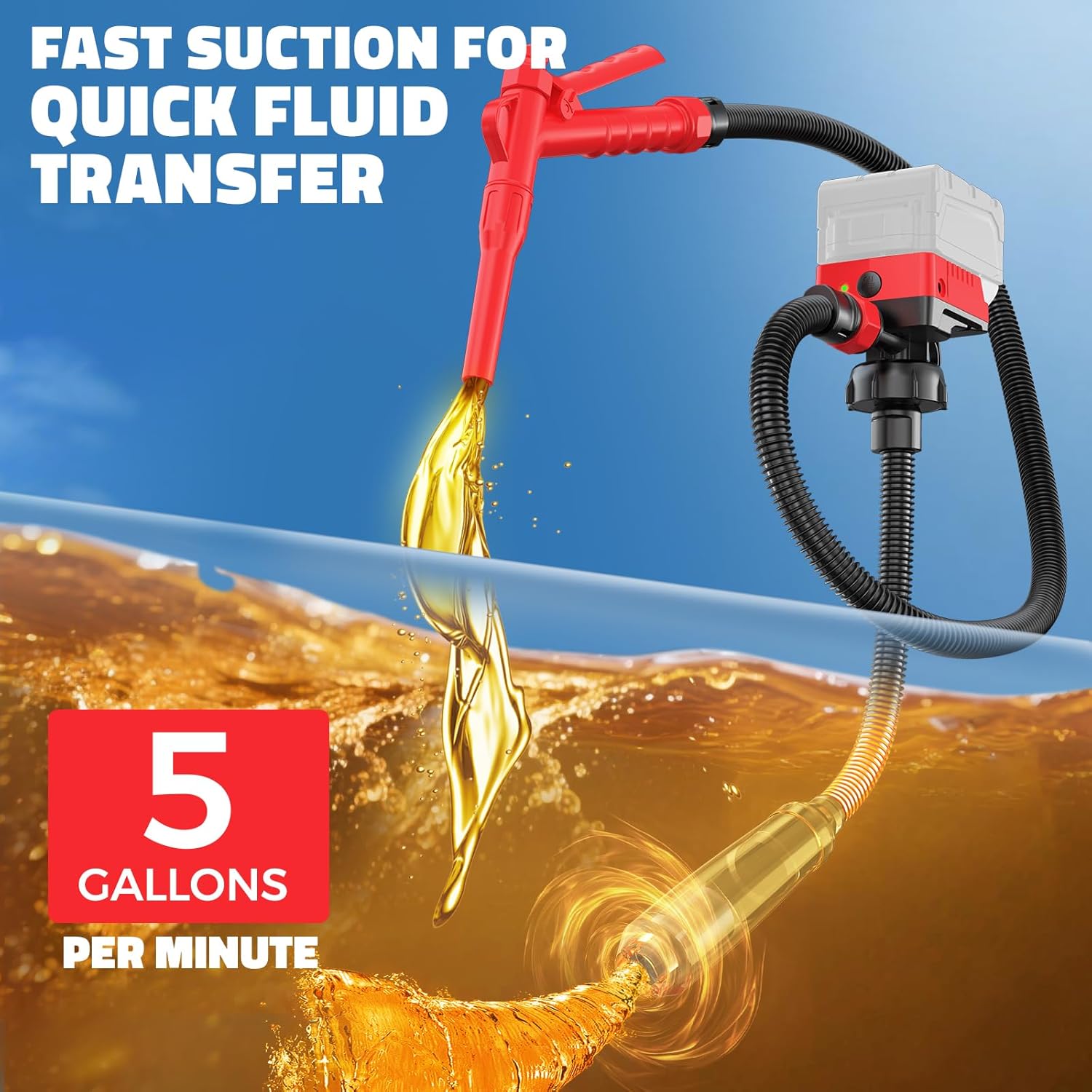
DIYtoolifz
$58.88
In stock on Amazon
Check price on AmazonBy the Numbers
| Pump | Advertised GPM | Owner-Reported GPM (10 ft hose) | Approx. 2026 Price | Mechanism |
|---|---|---|---|---|
| Fill-Rite FR1210G | 8 GPM | 4.5–6 GPM | $180–$220 | Rotary vane |
| VEVOR 12V (flagship) | 10 GPM | 3–4.5 GPM | $55–$90 | Diaphragm |
| Budget cordless (generic) | 2.5–3 GPM | 1–1.8 GPM | $30–$55 | Diaphragm |
Owner-reported figures represent aggregated patterns from long-run reviews; individual results vary with hose length, lift height, and fuel viscosity.
The Decision Rule: Matching Pump to Use Case
If you are reading this article, you have likely already narrowed to one of three scenarios. Here is the explicit decision frame.
If you transfer fuel regularly (weekly or more), pump diesel or high-ethanol blends, or need consistent performance across 3 or more years of service: the Fill-Rite FR1210G is the correct answer. The price premium over VEVOR units is recovered in durability and consistent flow within two to three years of regular use. The rotary vane mechanism handles head pressure better than diaphragm alternatives, the seal materials are documented against Tuthill Corporation’s specification sheet, and the aggregated owner record in fleet and agricultural contexts is uniquely long for this category. Wire it directly to a dedicated auxiliary battery or your vehicle’s battery — do not compromise the amp draw requirement.
If you transfer fuel seasonally or intermittently, primarily gasoline, and your total annual volume is under 200 gallons: a VEVOR or comparable mid-tier diaphragm pump is defensible. Budget for seal inspection or replacement at the 18–24 month mark if you are using E10 blends, and set accurate expectations: you are buying 3–4.5 GPM in real conditions, not the advertised 10. For most weekend overlanders and backup-generator households, that throughput is sufficient.
If your use case is a single small container, infrequent transfer, and cordless convenience matters more than throughput: the budget cordless tier is fit for purpose. Go in knowing you are buying a convenience tool, not a transfer pump. Do not use it as your primary fueling system for volumes above 5 gallons per session, and store it indoors — the lithium cells in most units carry no meaningful cold-weather discharge rating.
The spec sheet number that matters is not the advertised GPM peak. It is the flow rate at your actual head pressure and hose length. For most field setups, discount advertised figures by 40% and size from there. A pump that delivers 5 real GPM beats one that claims 10 and delivers 3.5 every time.