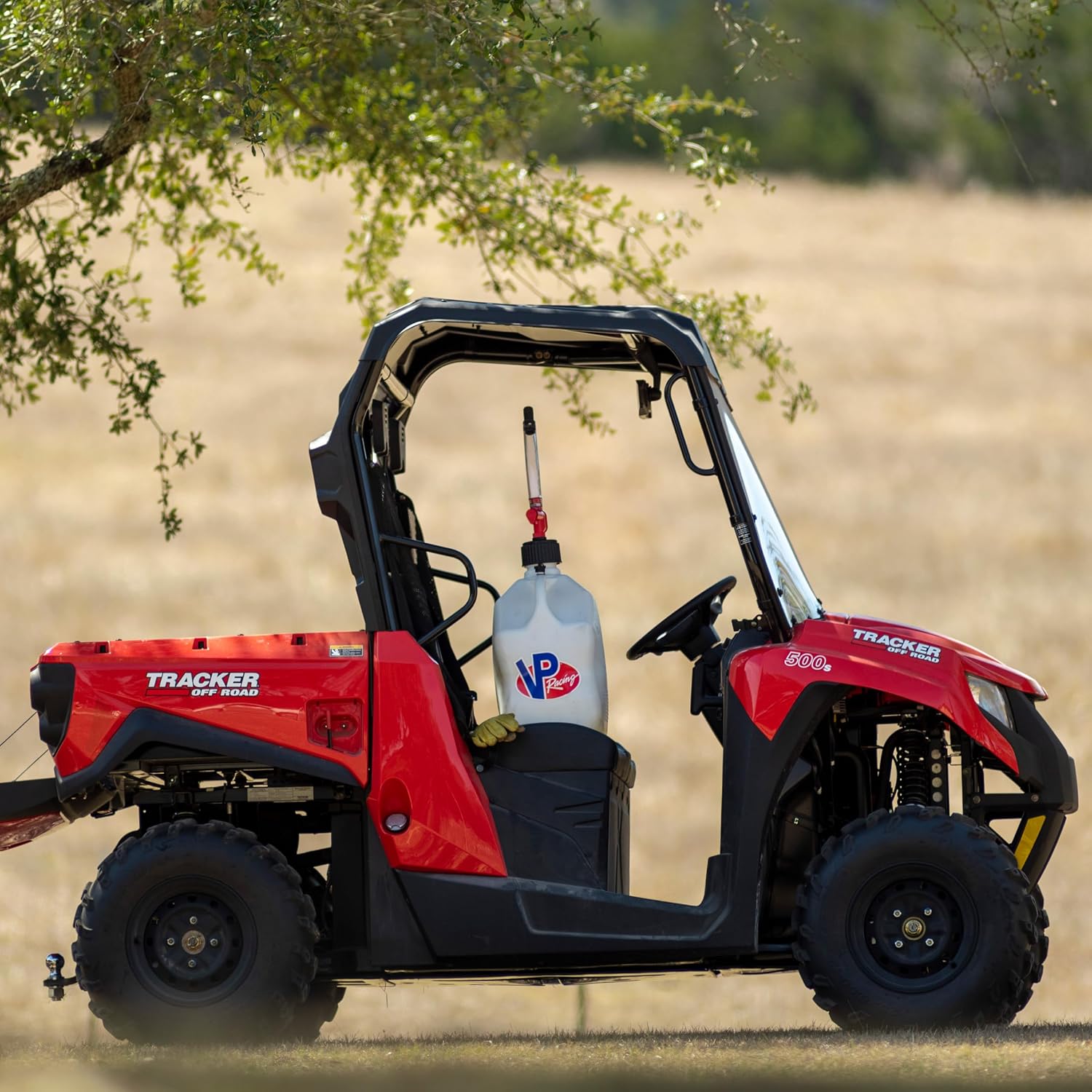
If you’ve ever watched a kart race or an amateur road-racing event, you’ve probably seen the bright, rectangular plastic jugs lined up in the pits — the ones that look nothing like the red gas cans at your local hardware store. Those are VP Racing motorsport containers, and the difference isn’t just branding. A motorsport jug (also called a spec container or racing fuel jug) is purpose-built for a specific kind of fueling scenario: fast transfers measured in seconds, repeated multiple times over a race day, often with high-octane or ethanol-blend fuels that can degrade standard plastics quickly. They’re not certified the same way a consumer fuel can is, they don’t have the auto-shutoff spouts required by federal EPA regulations on retail cans, and they’re designed around a completely different set of priorities — speed, stackability, and flow rate. If you’re moving from occasional track days toward a more systematic pit-lane operation, understanding how these jugs work — and where they fit versus where they don’t — will save you money, time, and at least one spill.
This guide covers VP Racing’s square-body container lineup, the hose and venting system that makes fast fuel drops possible, and the workflow decisions that separate a smooth pit stop from a chaotic one.
Why Square Bodies and What That Geometry Actually Buys You
VP Racing’s motorsport containers use a roughly square or rectangular cross-section rather than the tapered or jug-style profile common in consumer gas cans. That shape isn’t arbitrary — it solves two real problems at once.
Stackability and transport density. Square bodies stack flat on a trailer floor or in a cargo area without rolling or shifting. If you’re moving six to twelve gallons to a track day, the difference between square and round containers in a truck bed is significant. Published spec sheets for VP’s 5-gallon and 7.5-gallon square motorsport containers confirm they’re designed for flat stacking with no dedicated rack required, though operators in long-run reviews consistently note that a dedicated shelf or cargo net still reduces movement at highway speeds.
Pour angle and flow geometry. The wide, flat profile means when you tip the container into a funnel or direct-pour fitting, the fuel column stays predictable longer through the pour cycle. With a round jug, the center of gravity shifts earlier and the operator has to manage a more abrupt weight transfer in the final quarter of the pour. Motorsport pit operations — where a driver may be waiting and track time is literally money — benefit from that predictability.
The containers are made from high-density polyethylene (HDPE), the same base material used in consumer fuel cans, but VP’s motorsport-grade formulations are specified to be compatible with fuels that standard containers are not rated for: leaded race gas, high-concentration ethanol blends (E85, E98), and oxygenated fuels like those containing methanol or MTBE. Per VP Racing Fuels’ 2025 product catalog, their motorsport containers carry material compatibility specifications that consumer HDPE cans typically do not publish. This matters if you’re running E85 track builds, where fuel contact with incompatible plastics can degrade the container wall over time and contaminate the fuel.
One trade-off to name explicitly: VP motorsport containers are not EPA-compliant portable fuel containers under 40 CFR Part 59 Subpart F. That regulation, which covers retail-sold consumer fuel cans, requires specific spout designs, auto-shutoff features, and permeation standards. Motorsport jugs are sold for closed-course competition use. Using them for routine on-road fueling or storing them in a way that doesn’t comply with NFPA 30 flammable liquids guidelines puts you outside the safety framework those standards are designed to enforce. OSHA’s flammable liquids handling standard (29 CFR 1910.106) similarly draws a clear line between approved safety containers and application-specific containers. Know which category you’re working in.
Hose and Fitting Compatibility: The Part Nobody Researches Until They’re in the Pit Lane
The fastest single improvement to a motorsport fueling workflow is almost always the hose system, and it’s also where the most compatibility confusion occurs.
VP Racing’s square-body containers use a bung-style neck opening — typically a 2-inch diameter threaded bung on the top face of the container. The matching VP hose kits thread into this bung and terminate in either a direct-pour nozzle or a vented dump-style coupler designed to engage with a receiving fitting on the vehicle’s fuel cell or catch can.
Here’s the compatibility matrix that matters:
VP bung thread vs. standard NPT fittings. VP’s motorsport bung is not standard NPT (National Pipe Thread) or BSPP (British Standard Pipe Parallel). It’s a coarser, application-specific thread. This means off-the-shelf NPT-threaded hose barbs from a hardware store won’t seal correctly. You need either VP’s own hose kits or third-party motorsport hose assemblies specifically listed as VP-bung compatible. Operators in long-run track reviews frequently cite this as the source of their first-season leaks — they assumed the thread was universal.
Vented vs. non-vented hose caps. The fill rate of any container is limited by how fast air can replace the outflowing fuel. VP’s standard hose kits include a vent hole in the cap assembly that breaks the vacuum during pour. If you’re using a generic cap or a non-vented aftermarket closure, flow rate drops noticeably and you get the characteristic “glug-glug” interrupted pour. For a 5-gallon transfer into a fuel cell, this can add 15–20 seconds per fill — meaningful in a race day context.
Catch-can receivers and fuel cell fittings. If your build uses a fuel cell with an AN-fitting fill port (typically -6 AN or -8 AN, referring to the fitting’s tube size in sixteenths of an inch), you’ll need a hose-end adapter that steps from the VP dump nozzle to the AN port. These adapters exist in the motorsport plumbing market (Fragola, Earls, and Russell all publish compatibility specs for their adapter catalogs), but they’re not always in stock at track-day vendors. Order before you arrive.
By the Numbers
| Container Size | Published Flow Rate (VP hose kit) | Approximate Fill Time (5-gal fuel cell) | Bung Thread Size |
|---|---|---|---|
| 5-gallon square | ~2.5 gal/min (gravity, vented) | ~120 seconds | VP-spec 2” bung |
| 7.5-gallon square | ~2.5 gal/min (gravity, vented) | ~120 sec (first 5 gal) | VP-spec 2” bung |
Sources: VP Racing Fuels 2025 product catalog; flow estimates per gravity-pour physics at standard pour angle. Actual rates vary with fuel viscosity and pour height.
Building a Track-Day Fueling Workflow That Doesn’t Fall Apart
Having the right hardware is step one. The workflow around it — sequencing, labeling, venting, and cool-down management — is what separates practitioners from people who just own good gear.
Fuel type labeling and segregation. If you’re running multiple vehicles or supporting other drivers, color-coded containers are not optional. VP’s motorsport jugs come in multiple colors precisely for this reason — their catalog segments containers by color convention that’s loosely followed in the karting and club racing communities (red for gasoline-base, blue for high-octane leaded, and so on, though this is not a regulatory standard). Label every container with the exact fuel grade, date of fill, and any stabilizer additions. Popular Mechanics’ 2025 buyer’s guide on gas cans notes that fuel labeling is among the most commonly overlooked safety steps across consumer and enthusiast fuel handling alike.
Heat and cool-down protocols. Motorsport fuel containers sitting in direct sun on a black asphalt paddock surface can reach internal temperatures that cause pressure buildup — relevant even with HDPE containers that aren’t airtight like metal jerry cans. Standard practice among experienced operators, per aggregated track-day forum documentation, is to store containers in shade or under a canopy during sessions and to verify the vent cap is cracked slightly before opening the bung at operating temperature. This is basic pressure equalization, but it prevents the kind of fuel surge that causes spills.
Sequence the fill, don’t improvise it. A repeatable workflow runs: (1) confirm fuel grade against vehicle requirements, (2) ground the container against the vehicle chassis if conditions are dry (static discharge mitigation), (3) engage hose to bung and verify thread engagement, (4) open vent, (5) pour to target level, (6) close vent, disengage hose, re-cap bung. Steps 4 and 6 are the ones people skip when they’re rushed, and they’re the steps that cause the messes.
Storage between events. NFPA 30’s guidelines on portable container storage limit total quantities stored in non-rated structures and specify ventilation requirements. For most track-day operators, this means fuel left in containers between events should be minimized — use what you bring, or transfer remainder into a properly rated storage can for transport home. The square-body VP containers are not UN-certified transport containers (that’s a separate certification pathway covering drop-test and pressure standards), so they shouldn’t be treated as long-term storage vessels the way a Wavian or Scepter steel jerry can would be.
Decision Rules: If X, Then Y
If you’re running karting or autocross with a single vehicle and fueling once or twice per event day, a single 5-gallon VP square-body with the standard VP hose kit covers the use case cleanly. Budget accordingly — the jug plus hose kit lands in the $60–$90 range at motorsport retailers as of mid-2026.
If you’re supporting multiple vehicles or a club team, the 7.5-gallon containers give you more transfer capacity per unit and reduce the number of trips to the fuel station during a tight schedule. Buy at least one spare hose kit — hose ends crack under repeated use in cold weather conditions, and you won’t find a replacement in the paddock.
If your build uses AN-fitting fuel cells, source your VP-bung-to-AN adapter before your first event, not at the track. Fragola and Earls both publish fitting compatibility charts that are findable through their distributor networks — use those to spec the correct reducer.
If you’re considering VP motorsport containers for routine storage or road use — don’t. Use a DOT-compliant, EPA-approved consumer can for that application. The VP containers are the right tool for a specific context; outside that context, they trade away regulatory coverage without giving you anything in return.
The square-body VP jug earns its place in a track-day kit because it was designed for exactly that scenario. Match the hose system correctly, build a consistent workflow, and it performs the job reliably. Misapply it, and it’s just an expensive plastic box.